
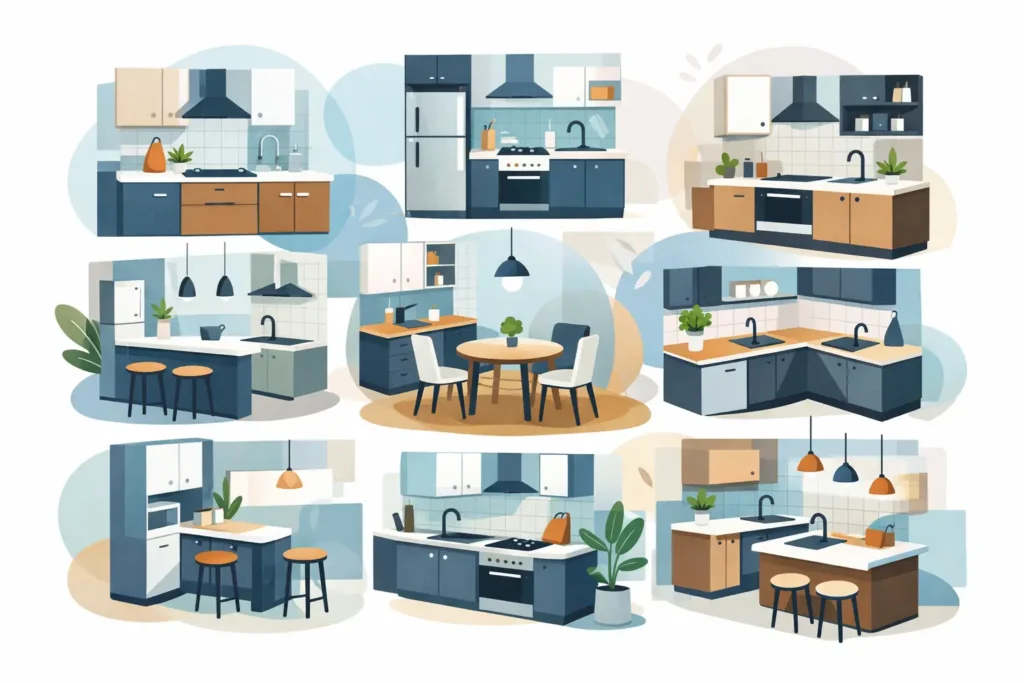
A small kitchen usually stops working in the same three places – the walkway gets tight, storage runs out fast, and one awkward corner throws off the whole room. That is why the best small kitchen layout ideas are not just about fitting more cabinets in. They are about creating a kitchen that feels easy to use every day, whether you are making school lunches, hosting friends, or upgrading your home for long-term value.
In Southern California homes, that challenge shows up in all kinds of spaces – compact condos, older homes with closed-off kitchens, guest houses, and income properties where every square foot matters. A smart layout can make a small kitchen feel larger, brighter, and far more functional without losing the look you want.
What makes small kitchen layout ideas actually work
The best layouts solve movement first. If you cannot open the dishwasher without blocking the path, or if the refrigerator door interrupts prep space, the kitchen will always feel smaller than it is. Good design starts with how you move between the sink, cooktop, and refrigerator, then builds storage and style around that pattern.
Scale matters just as much. Deep cabinets, oversized islands, and bulky appliances can overwhelm a compact room. In smaller kitchens, every inch has to earn its place. That often means making sharper design decisions early, not adding features just because they look appealing in a larger showroom kitchen.
Natural light, sightlines, and visual weight also change how the layout feels. Two kitchens can have the same square footage, but the one with better circulation and cleaner lines will feel much more open.
1. The one-wall kitchen for open living
A one-wall layout places the sink, range, and refrigerator along a single wall, keeping the rest of the room open. This works especially well in condos, ADUs, and smaller homes where the kitchen connects directly to the living or dining area.
The main advantage is simplicity. It frees up floor space and supports a clean, modern look. It also makes a small room feel less boxed in, which is valuable if you want your kitchen to blend into a broader open-concept remodel.
The trade-off is storage and counter space. A one-wall kitchen needs thoughtful cabinetry, often extending upward to the ceiling, and usually benefits from drawers over lower shelves. If space allows, adding a narrow island or peninsula nearby can restore some prep area without crowding the room.
2. Galley layouts that maximize efficiency
Among the most dependable small kitchen layout ideas, the galley kitchen remains one of the strongest performers. With two parallel runs of cabinets and appliances, it creates an efficient workspace where everything stays close at hand.
This layout is ideal for serious cooking in a compact footprint. It can offer more usable counter area than a one-wall kitchen and often provides excellent upper and lower cabinet storage. In older homes, it can also be the most natural fit because it works within existing walls.
That said, width is critical. If the aisle is too narrow, the kitchen feels cramped. If it is too wide, the efficiency disappears. A galley kitchen also benefits from restraint on finishes and cabinetry details. Lighter colors, integrated appliances, and continuous flooring can help it feel more spacious and less corridor-like.
3. L-shaped kitchens for flexibility
An L-shaped layout uses two adjoining walls and leaves the center of the room open. This is one of the most flexible options for a small kitchen because it supports good circulation and can adapt to many room shapes.
It works especially well when you want the kitchen to feel connected to an adjacent dining or family space. The open center makes the room easier to move through, and the corner can be used for storage solutions that would not fit in a tighter galley.
The challenge is making the corner functional. Blind corners can waste valuable space if they are not designed properly. This is where custom planning makes a difference. The right corner cabinet solution, paired with well-placed task lighting and practical drawer storage, can turn an awkward area into one of the most useful parts of the room.
4. U-shaped kitchens with smart boundaries
A U-shaped kitchen wraps around three sides, creating a compact and highly functional work zone. In a small kitchen, this layout can be excellent for homeowners who want maximum storage and dedicated prep space.
Used well, it provides strong workflow and keeps everything within reach. It can also define the kitchen clearly in an open space without needing full walls.
Used poorly, it can feel enclosed. That is why proportions matter. Shorter runs, open shelving on one side, or a partial wall instead of full-height cabinetry can keep the design from feeling heavy. This layout tends to work best when the kitchen is just large enough to support the wraparound without forcing a tight center aisle.
5. Small kitchen peninsula layouts
When a full island is too large, a peninsula often gives you the same benefits in a better footprint. It extends from a wall or cabinet run and creates additional counter space, seating, and storage while preserving circulation.
For many homeowners, this is the sweet spot. A peninsula can anchor the kitchen, create casual dining, and add separation from the living area without closing the space off. It is especially useful in open-plan remodels where you want a more social kitchen but do not have room for a freestanding island.
The key is clearance. If the peninsula pinches pathways or interferes with appliance doors, it will create frustration fast. Proper dimensions make all the difference.
6. Add an island only if the room can support it
A small kitchen island can be a great feature, but not every compact kitchen should have one. This is where homeowners often get pulled toward a trend that does not match the room.
An island works when it improves prep space and traffic flow, not when it becomes an obstacle. In some kitchens, a slim island with storage on both sides and room for one or two stools is a smart upgrade. In others, it eats up the very openness the remodel is supposed to create.
If your room is tight, a movable island or custom narrow worktable may deliver the same function with more flexibility. Good design is not about forcing a feature in. It is about choosing the layout that performs best for your daily life.
7. Floor-to-ceiling storage that keeps the layout clean
Storage shapes layout more than most people expect. If base cabinets are overloaded and counters become catch-all zones, even a beautiful kitchen starts to feel chaotic. One of the most effective small kitchen layout ideas is to build vertically.
Tall pantry cabinets, upper cabinets to the ceiling, appliance garages, and deep drawer systems can dramatically improve function without expanding the footprint. This approach is especially valuable in smaller homes where the kitchen has to absorb more household storage.
The design balance matters, though. Too many heavy upper cabinets can make the room feel top-loaded. Mixing closed storage with a lighter backsplash, glass accents, or carefully placed open shelving can keep the space feeling bright.
8. Integrated appliances and scaled-down fixtures
Large appliances can dominate a compact kitchen. Choosing a more proportional refrigerator, a slimmer range, or a microwave drawer can free up layout options you would not otherwise have.
This does not mean sacrificing performance. It means selecting appliances that match the room. Panel-ready or integrated appliances also help reduce visual clutter, which makes the entire kitchen feel calmer and more expansive.
The same principle applies to sinks, lighting, and hardware. In smaller kitchens, oversized design elements can quickly throw off the balance.
9. Open sightlines create a bigger feel
Sometimes the best layout improvement is removing what interrupts the room. A partial wall, bulky soffit, or poorly placed upper cabinet may be doing more harm than a lack of square footage.
Opening sightlines can completely change how a kitchen lives. Even modest structural changes can allow more light in, improve the connection to nearby rooms, and make the kitchen feel far less confined. For homeowners planning a larger remodel, this is often where the most meaningful transformation happens.
At Creative Remodeling 1, this is the kind of design-and-build thinking that turns a basic kitchen update into a more valuable whole-home improvement. The layout is not treated as an isolated feature. It is planned as part of how the home should function and feel.
10. Layout choices should match how you live
The right kitchen layout depends on more than square footage. A family that cooks daily may need more prep space and better pantry storage. A rental or guest house kitchen may benefit from a simpler, durable layout that feels open and polished. A homeowner who entertains may care more about seating and connection to the living room.
That is why the strongest remodels start with habits, not just measurements. The best small kitchen layout ideas are the ones that solve your specific frustrations while giving the space a more elevated, intentional look.
A compact kitchen does not have to feel limiting. With the right layout, it can become one of the most impressive rooms in the house – efficient, beautiful, and built around the way you actually live.