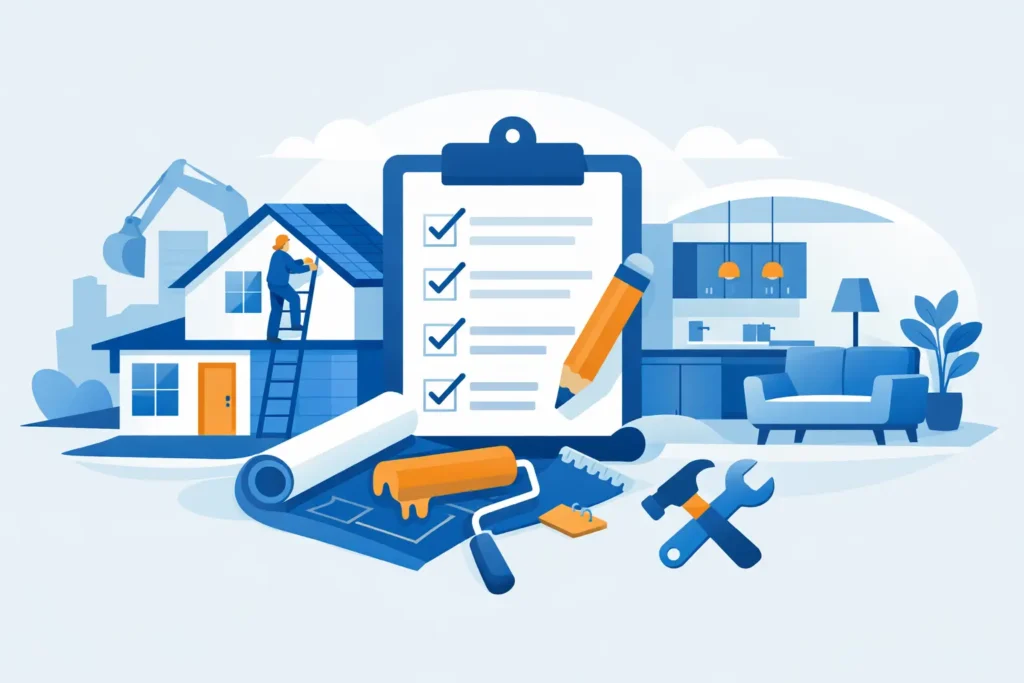
A whole-home remodel can feel exciting right up until the moment you realize how many moving parts are involved. A smart full home renovation checklist keeps the project grounded, helps you make better decisions early, and gives you a clearer path from first ideas to finished spaces that actually fit your lifestyle.
For Southern California homeowners, that matters even more. Renovation plans often need to balance design goals with permitting, structural updates, energy efficiency, indoor-outdoor living, and the simple reality that you still need the process to feel manageable. The best projects are not just beautiful at the end. They are organized from the start.
Why a full home renovation checklist matters
Most renovation stress comes from preventable issues – unclear priorities, unrealistic budgets, delayed selections, and discovering scope gaps after construction begins. A checklist helps you define what you want before crews arrive, which usually saves time, money, and decision fatigue.
It also keeps the project aligned with the way you live. Some homeowners want a more open layout for family life. Others are focused on resale value, rental income, or creating space for aging parents or adult children. The right plan is not one-size-fits-all. It depends on your goals, your home’s condition, and how far you want to go.
Start with vision, not demolition
Before talking finishes or fixtures, get specific about why you are renovating. If your kitchen is closed off, your bathrooms are dated, your flooring is worn, and your windows let in too much heat, those are all real issues. But they are not the full strategy.
Ask yourself what success looks like when the project is done. Maybe it means a brighter, more modern home with better flow. Maybe it means converting a garage into livable space, improving curb appeal, or updating an older property so it performs better and feels easier to maintain. When the vision is clear, the checklist becomes more useful because every decision can be measured against it.
Define your must-haves and nice-to-haves
This step sounds simple, but it prevents expensive confusion later. Your must-haves are the changes that solve the biggest problems. Nice-to-haves are upgrades you would love if the budget allows.
For example, replacing an aging roof or outdated electrical system may belong in the must-have category, even if it is less exciting than a waterfall island or custom built-ins. Great remodeling is not only about what photographs well. It is about building a home that functions beautifully from the inside out.
Build the checklist around your budget
A renovation budget should do more than set a spending cap. It should shape the scope, materials, and sequence of work.
Start with a realistic total investment number, then break it into categories like design, permits, labor, materials, finish selections, and contingency. That last category matters. Older homes often reveal hidden issues once walls are opened, especially with plumbing, framing, insulation, or moisture damage. If your house has not been updated in years, plan for some level of discovery.
There is always a trade-off between customization, speed, and cost. If you want highly tailored finishes and layout changes, expect more planning and potentially a higher price point. If your priority is efficiency, you may choose to keep plumbing locations where they are or simplify certain selections.
Full home renovation checklist: key planning steps
At the planning stage, the most important thing is getting the scope right. That means deciding which spaces are included and what each one needs.
Your checklist should cover kitchens, bathrooms, flooring, paint, lighting, windows, doors, roofing, exterior finishes, and any structural or layout changes. If you are considering a garage conversion, ADU, or expanded living area, include that from the beginning rather than treating it as an afterthought.
You should also account for practical details that affect daily life, such as storage, laundry, traffic flow, and where natural light enters the home. These are often the differences between a remodel that simply looks updated and one that genuinely improves how the house feels.
Confirm the condition of the home
A beautiful design plan still needs a solid foundation. Before finalizing cosmetic upgrades, evaluate the home’s core systems and structure. That may include the roof, electrical panel, plumbing lines, HVAC performance, insulation, windows, and any signs of water intrusion or settling.
This part of the checklist is where experience matters. Homeowners often focus on surfaces first, but long-term value comes from addressing what is underneath. If the bones of the house need attention, it is smarter to handle those updates during a major renovation rather than redo finished areas later.
Decide what requires permits and approvals
Permits are not the glamorous part of remodeling, but they are essential. Layout changes, electrical work, plumbing updates, roofing, window replacements, additions, and conversions may all require approvals depending on the project and local jurisdiction.
This is one area where trying to rush can backfire. Permit timelines can affect the construction schedule, and skipping required approvals can create problems when refinancing, insuring, or selling the home. A professional design-build team can help you understand what is required before work begins.
Make selections early
One of the biggest causes of delays is incomplete selection work. If cabinets, tile, plumbing fixtures, flooring, doors, or windows are still undecided after construction starts, the timeline can slip fast.
Choose major finishes as early as possible. That does not mean every accessory has to be finalized on day one, but the core materials should be aligned before demolition. Think about style, durability, maintenance, and how each finish works with the rest of the home.
For busy households, this is where guided support makes a real difference. Instead of piecing together decisions from multiple vendors, homeowners usually get better results when design and construction are coordinated under one process. Creative Remodeling 1 approaches projects that way, helping homeowners move from inspiration to execution with more clarity and less friction.
Plan for layout, flow, and daily living
A full renovation is the right time to fix how the home works, not just how it looks. Open-concept layouts can make a home feel larger and more connected, but they are not always the right answer for every family. Some homeowners want more privacy, better sound separation, or flexible rooms that serve multiple purposes.
Think through everyday patterns. Where do people enter the home? Is there enough kitchen storage? Does the primary bathroom feel functional? Are you improving one room while ignoring another bottleneck nearby? A strong checklist looks at the home as a system, not a series of unrelated upgrades.
Prepare for the construction phase
Once plans, budget, and selections are in place, the project moves into execution. This is where expectations should be clear. Ask about the projected schedule, work hours, site protection, communication process, and how change orders will be handled if needed.
If you are living in the home during construction, decide in advance what that will realistically feel like. For some projects, staying put makes sense. For others, especially when kitchens, bathrooms, flooring, and major systems are being renovated at once, temporary relocation may be the less stressful option.
Include a move-out and protection plan
Your renovation checklist should account for furniture moving, material storage, dust protection, pet safety, and access to essential spaces. If children, remote work, or special routines are part of the household, those details deserve attention before demo starts.
Good preparation does not eliminate every inconvenience, but it makes the process more predictable. That is a major advantage in large-scale remodeling.
Don’t overlook the exterior
When homeowners think full renovation, they often picture kitchens, bathrooms, and floors first. But the exterior plays a major role in both value and comfort. Roofing, windows, doors, paint, stucco, and outdoor living features all shape the final result.
In Southern California, exterior improvements can also support energy efficiency and indoor-outdoor use. New windows and doors may improve comfort while giving the home a cleaner, more current look. Exterior updates can also create the cohesive finish that makes the entire renovation feel complete rather than pieced together over time.
Final walkthroughs matter more than people expect
As the project nears completion, your checklist should shift toward quality control. Review each space carefully. Test lighting, plumbing fixtures, doors, drawers, appliances, windows, and finish details. Make note of anything that needs adjustment so punch-list items are addressed before the project is closed out.
This is also the time to collect warranty information, care instructions, and any documentation related to installed products or permitted work. A polished final handoff helps you protect the investment long after construction is done.
A full home renovation is a big decision, but it is also a rare opportunity to reshape your home around the way you want to live now. When the process starts with the right checklist, the project feels less overwhelming and far more intentional – which is exactly how great transformations begin.