
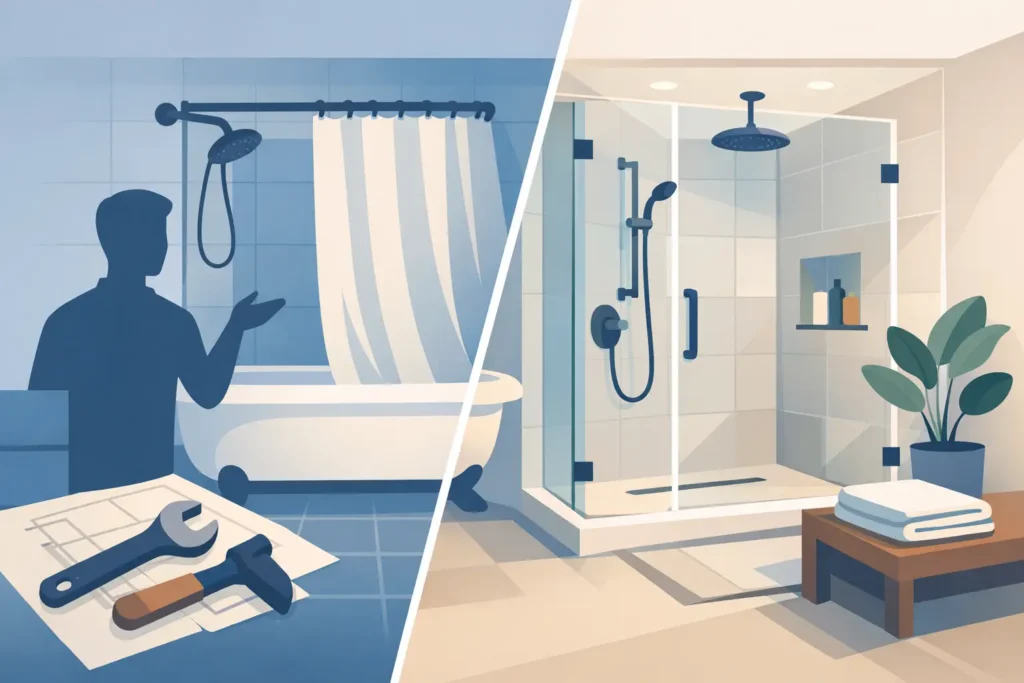
That high tub wall becomes a bigger problem the longer you live with it. For many homeowners, a walk in shower conversion starts as a safety upgrade, but it quickly becomes something more – a cleaner look, easier daily use, and a bathroom that finally feels current.
In Southern California homes, where comfort, resale value, and smart design all matter, replacing a traditional tub with a walk-in shower is one of the most practical bathroom updates you can make. It can open up the room visually, improve accessibility, and give you far more flexibility with layout and finishes. The key is knowing what changes are worth making, what trade-offs to expect, and how to design the space around the way you actually live.
Why a walk in shower conversion makes sense
A standard tub-shower combo works fine until it doesn’t. Maybe the bathroom looks dated. Maybe stepping over the tub edge feels less stable than it used to. Maybe the space feels cramped, hard to clean, and out of step with the rest of your home.
A walk in shower conversion solves several of those issues at once. It replaces a bulky fixture with a more streamlined footprint, often making the room feel larger even if the overall square footage stays the same. It also gives you more control over the details that affect comfort every day, from entry style and drainage to storage niches and lighting.
For homeowners updating a primary bath, this type of remodel often brings a more polished, custom look. For guest baths, condos, and income properties, it can be a strong value-add when done thoughtfully. Buyers and renters alike tend to respond well to bathrooms that feel bright, low-maintenance, and modern.
That said, it depends on the home. If you only have one bathtub in the entire house, removing it may not always be the best resale move, especially for households with young children. In homes with multiple bathrooms, converting one tub to a walk-in shower is usually a much easier decision.
What changes during a walk in shower conversion
On the surface, this project looks simple: take out the tub, build a shower. In reality, the best results come from treating it as a design-and-build update rather than a basic fixture swap.
Once the old tub and surrounding walls are removed, the space can be reworked to improve function and appearance. Plumbing may need to be adjusted to fit a new shower valve, rain head, handheld unit, or linear drain. The floor often needs preparation to create the right slope and waterproofing system. Wall surfaces are rebuilt to support tile, slab panels, or other water-resistant finishes.
This is also the stage where hidden issues sometimes appear. In older homes, contractors may uncover water damage, outdated plumbing, or framing that needs correction before the new shower goes in. That is not unusual, but it is one reason experienced planning matters. A well-managed project accounts for what is visible and what may be discovered once demolition begins.
Design choices that shape the final result
The biggest difference between an average remodel and a standout one usually comes down to design decisions. A walk-in shower should not only fit the room – it should improve how the room feels.
Entry style and layout
Some homeowners want a fully open entry with little to no visual interruption. Others prefer a fixed glass panel that helps contain splash while keeping the space airy. If the bathroom is compact, layout becomes especially important. Even a few inches in the right place can improve movement and comfort.
Curbless entries are popular for both style and accessibility, but they are not always the right fit for every structure. In some homes, especially on slab foundations, achieving that flush look may require more extensive floor work. A low-profile threshold can still offer a clean appearance with fewer construction constraints.
Tile, wall panels, and finishes
Large-format tile creates a sleek, modern look with fewer grout lines to maintain. Textured tile on the floor can improve slip resistance. Quartz or solid-surface wall panels appeal to homeowners who want a refined appearance with easier upkeep.
Finish selections matter too. Matte black, brushed nickel, and warm metallics each create a different mood. The right combination should feel connected to the rest of the home, not like an isolated update.
Storage and built-in features
A shower niche sounds like a small detail until you realize how much cleaner the space looks without bottles lined up on the floor. Built-in benches, recessed shelving, dual shower heads, and handheld sprayers can all be incorporated during the conversion.
These features should be chosen based on use, not just trend. A bench can be helpful for comfort and accessibility, but in a very tight shower, it may reduce usable standing space. A rainfall head looks luxurious, but many homeowners still want a standard wall-mounted fixture for everyday practicality.
Safety, comfort, and aging in place
One of the strongest reasons to consider a walk in shower conversion is long-term usability. A bathroom should support your lifestyle now, but it should also make sense five, ten, or fifteen years from now.
Low-entry showers reduce the risk that comes with stepping over a tub wall. Grab bars can be integrated in a way that feels intentional and attractive rather than clinical. Wider openings, built-in seating, and handheld fixtures can make the shower more comfortable for homeowners of all ages.
This is where good design really earns its value. Accessibility features do not have to make the bathroom look institutional. With the right planning, they can blend into a high-end design and add everyday convenience for everyone using the space.
How long does the project take?
Most homeowners want to know how disruptive the remodel will be. The timeline depends on the scope, material availability, permit requirements, and whether hidden repairs are needed after demolition.
A straightforward conversion may move faster than a full bathroom remodel, but it still involves several coordinated steps: demolition, plumbing updates, framing or substrate prep, waterproofing, tile or wall installation, glass installation, and finish work. If you are upgrading surrounding flooring, vanity areas, or lighting at the same time, the schedule naturally grows.
The benefit of doing it right is that you end up with a shower built for long-term performance, not a cosmetic patch. For homeowners who are already investing in the bathroom, it often makes sense to address adjacent finishes at the same time so the final result feels cohesive.
What affects the cost?
Walk-in shower conversions vary widely in price because the project can be as simple or as custom as you want it to be. Material selections, plumbing changes, waterproofing systems, glass enclosures, and tile complexity all influence the final investment.
A basic conversion with standard finishes will cost less than a custom design with premium tile, frameless glass, recessed lighting, bench seating, and multiple shower fixtures. Structural adjustments or plumbing relocation can also increase cost, especially in older homes.
The better question is not just what the project costs, but what value you want it to deliver. For some homeowners, that means improving safety and function without overbuilding the room. For others, it means creating a spa-like primary bath that elevates the entire home. Both can be smart investments when the design aligns with your goals.
Choosing the right contractor for a walk in shower conversion
This is one of those projects where craftsmanship matters more than promises. A beautiful shower that is not properly waterproofed will not stay beautiful for long. Clean tile lines, quality plumbing work, and thoughtful layout planning all come from experience, not guesswork.
Look for a contractor who can guide both design and construction, explain options clearly, and help you weigh style against budget and function. You want a team that sees the conversion as part of your larger home experience, not just a one-day installation. That consultative approach tends to lead to better results because the decisions are made around your space, your priorities, and your long-term plans.
For homeowners who want a bathroom that feels custom instead of cookie-cutter, working with a full-service remodeling partner like Creative Remodeling 1 can make the process more focused and far less stressful.
Is it the right move for your home?
If your current tub is rarely used, your bathroom feels dated, or you want a more comfortable setup for daily living, a walk-in shower conversion is often a smart upgrade. It delivers practical benefits right away while giving the room a more open and elevated feel.
The best projects balance beauty with realism. They consider how many bathrooms are in the house, who uses the space, what the home may need for resale, and which details will matter most over time. When those pieces come together, the result is not just a nicer shower. It is a bathroom that works better every day and adds lasting confidence to your home.
If you are thinking about making the change, start with the way you want the room to function, then build the design around that. The smartest remodels always begin there.