
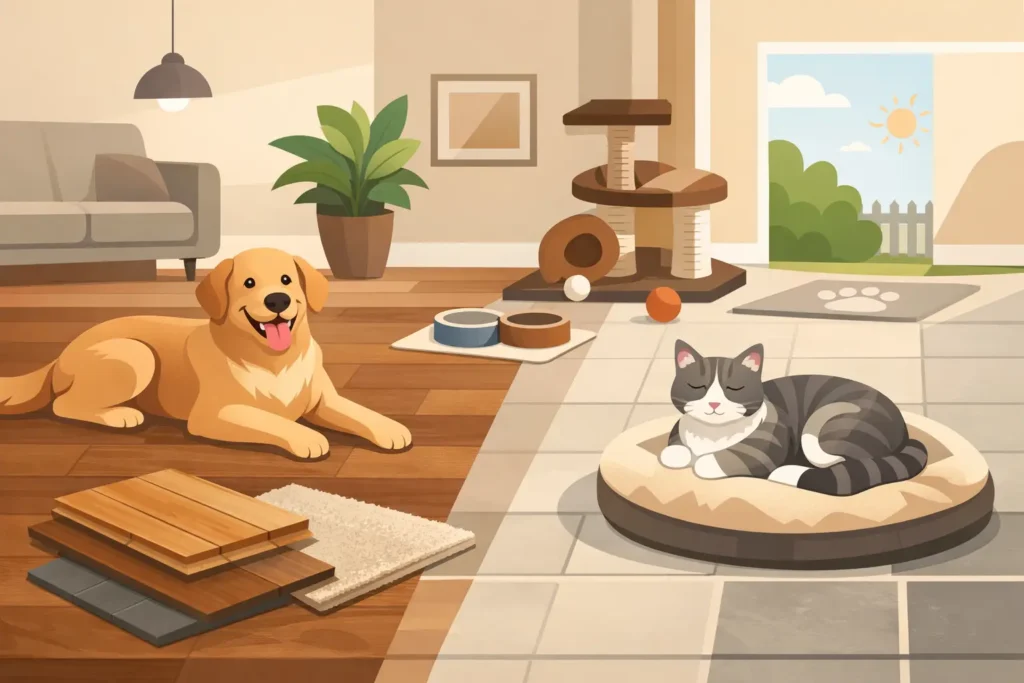
A beautiful home can lose its shine fast when paws, claws, accidents, and shedding become part of daily life. If you are choosing the best flooring for pets, the goal is not just finding something tough. It is finding a floor that holds up to real living, looks elevated, and still fits the style of your home.
For many Southern California homeowners, that means balancing durability with design. You want flooring that can handle a zooming puppy, an older dog with occasional accidents, or a cat that treats every hallway like a racetrack. At the same time, you do not want your floors to feel purely practical or look like an afterthought in a thoughtfully remodeled space.
What makes the best flooring for pets?
Pet-friendly flooring needs to perform in a few key areas. Scratch resistance matters, especially with large dogs or multiple pets. Water resistance matters just as much, since spills, water bowl splashes, and accidents are part of the picture. Comfort matters too. A hard, slippery surface may be easy to clean, but it is not always ideal for older pets or active animals that need traction.
The best flooring for pets also needs to work with the way you live. A rental property with frequent turnover may call for a different material than a forever home with custom finishes. A busy family room sees different wear than a guest bedroom. That is why the right answer is usually less about the single best material and more about the best fit for your space, style, and daily routine.
Luxury vinyl plank is hard to beat
If homeowners ask for one flooring option that checks the most boxes, luxury vinyl plank usually leads the conversation. It is one of the strongest all-around choices for pet owners because it offers impressive water resistance, strong durability, and a softer, quieter feel underfoot than tile.
For households with dogs, luxury vinyl plank handles muddy paws, nails, and food bowl messes with less stress than many traditional materials. It also comes in a wide range of wood-look finishes, which means you can keep a warm, high-end design without choosing a floor that is easily damaged.
That said, quality matters. A lower-grade vinyl product may show wear sooner, especially in high-traffic areas. Thicker planks with a strong wear layer tend to perform better over time. Installation matters too, because poorly installed flooring can shift, gap, or allow moisture to work underneath.
Tile is a strong choice, with a few trade-offs
Porcelain or ceramic tile is another top contender if your priority is durability and moisture resistance. It stands up extremely well to accidents, water, and heavy traffic. For pet owners who want a clean, polished finish that lasts, tile has a lot going for it.
In Southern California homes, tile also makes sense for warm weather. It stays cool underfoot, which many pets appreciate, especially in sunnier rooms or homes with large windows. For homeowners creating a sleek, modern look, tile can align beautifully with the rest of a remodel.
The trade-off is comfort. Tile is hard, and it can be slippery unless you choose a finish with more grip. That may be less ideal for older dogs, pets with joint issues, or animals that tend to run indoors. Grout lines can also collect dirt and require more maintenance than many people expect.
Laminate has improved, but it depends on the product
Laminate flooring has come a long way, and some newer products perform surprisingly well in pet-friendly homes. It can offer strong scratch resistance and a clean, updated appearance at a more approachable price point than some hardwood alternatives.
Where laminate can struggle is moisture. Even water-resistant versions are not always as forgiving as luxury vinyl or tile. If an accident sits too long, or if water repeatedly gets into the seams, the material can swell or warp. That does not automatically rule it out, but it does mean laminate works best for pet owners who are confident about quick cleanup and want it in lower-risk areas.
For homeowners who love the look of wood but want to be cost-conscious during a broader renovation, laminate may still have a place. It just requires a more careful product selection process.
Is hardwood ever the best flooring for pets?
Hardwood is often the flooring homeowners want most, and for good reason. It brings warmth, value, and timeless character to a home. In the right setting, it can absolutely work for pet owners. But it is rarely the most forgiving option.
Claws can scratch softer wood species, and moisture can become a serious issue if accidents are not cleaned up right away. Some finishes hold up better than others, and certain species are harder and more resilient, but hardwood still requires more caution than vinyl or tile.
That does not mean you have to give it up if it is part of your design vision. Many homeowners choose hardwood in lower-risk areas and use more pet-resistant materials in high-traffic zones, mudrooms, kitchens, or family rooms. A thoughtful whole-home flooring plan often delivers a better result than forcing one material into every room.
Carpet is usually the toughest sell
Carpet is comfortable and quiet, but for most pet owners, it is not the easiest flooring to live with. It traps fur, absorbs odors, and can stain more easily than hard surface flooring. Even when the carpet itself performs well, the padding underneath can hold moisture and smells after repeated accidents.
There are cases where carpet still makes sense, such as in select bedrooms or upstairs spaces where softness matters most. If that is the route, stain-resistant carpet tiles or low-pile options are generally easier to maintain than plush broadloom carpet. Still, for the main living areas of a pet-friendly home, hard surfaces tend to be the smarter long-term investment.
Design matters as much as durability
Choosing pet-friendly flooring is not only about what survives. It is also about what still looks beautiful after months and years of use. Mid-tone colors often work better than very dark or very light floors because they hide dust, fur, and minor debris more effectively. Textured finishes can also help disguise small scratches and add traction.
This is where professional guidance makes a difference. A floor sample may look perfect in isolation, but in a real home, lighting, room layout, pet habits, and the rest of your finishes all affect the result. The best outcome usually comes from looking at flooring as part of the entire design story, not as a stand-alone material choice.
How to choose the right floor for your specific pets
A home with one senior cat has different needs than a household with two large dogs and kids coming in from the backyard. Pet age, size, activity level, and training all influence what flooring will perform best.
If traction is a concern, look beyond appearance and focus on slip resistance. If accidents are likely, prioritize waterproof performance over appearance alone. If scratching is your biggest worry, compare wear layers, finishes, and surface textures carefully. The best flooring for pets is rarely chosen by trend alone. It is chosen by how well it supports your actual day-to-day life.
For larger remodels, it also helps to think room by room. Kitchens, entryways, and family rooms usually need the strongest performance. Bedrooms and lower-traffic areas may allow for more flexibility. A tailored approach often creates a home that feels both practical and elevated.
A smarter investment for the long term
Flooring is one of the surfaces you interact with every day. When it is chosen well, it makes your home easier to maintain, more comfortable to live in, and more visually cohesive. When it is chosen poorly, it can become a constant source of frustration.
That is why many homeowners planning a renovation use flooring selection as an opportunity to upgrade both function and style at the same time. At Creative Remodeling 1, that kind of decision is part of the bigger picture – creating a home that supports your lifestyle without asking you to compromise on design.
If you share your home with pets, the right flooring should not force you to choose between durability and beauty. You can have a floor that stands up to everyday wear, complements your design goals, and helps your home feel polished from the moment you walk in the door.