A roof problem rarely starts with a dramatic collapse. More often, it shows up as a small ceiling stain after a rare Southern California storm, a few shingles in the yard, or rising energy bills that do not seem connected at first. If you have been wondering about the signs you need a new roof, the smartest move is to catch them early – before a repair turns into interior damage, structural issues, or a much larger renovation.
For many homeowners, the roof is easy to ignore because it is out of sight and doing its job quietly. But like any major part of your home, it has a lifespan. Sun exposure, heat, wind, older materials, and delayed maintenance all add up over time. The key is knowing when a roof can still be repaired and when replacement is the better investment.
The clearest signs you need a new roof
One missing shingle after heavy wind does not always mean you need a full replacement. But when multiple warning signs start appearing together, the bigger picture matters.
Age is one of the first things to consider. Many asphalt shingle roofs last around 20 to 25 years, depending on installation quality, ventilation, and weather exposure. Tile and other materials can last longer, but that does not make them immune to underlayment failure or long-term wear. If your roof is approaching the end of its expected life, even modest problems deserve closer attention.
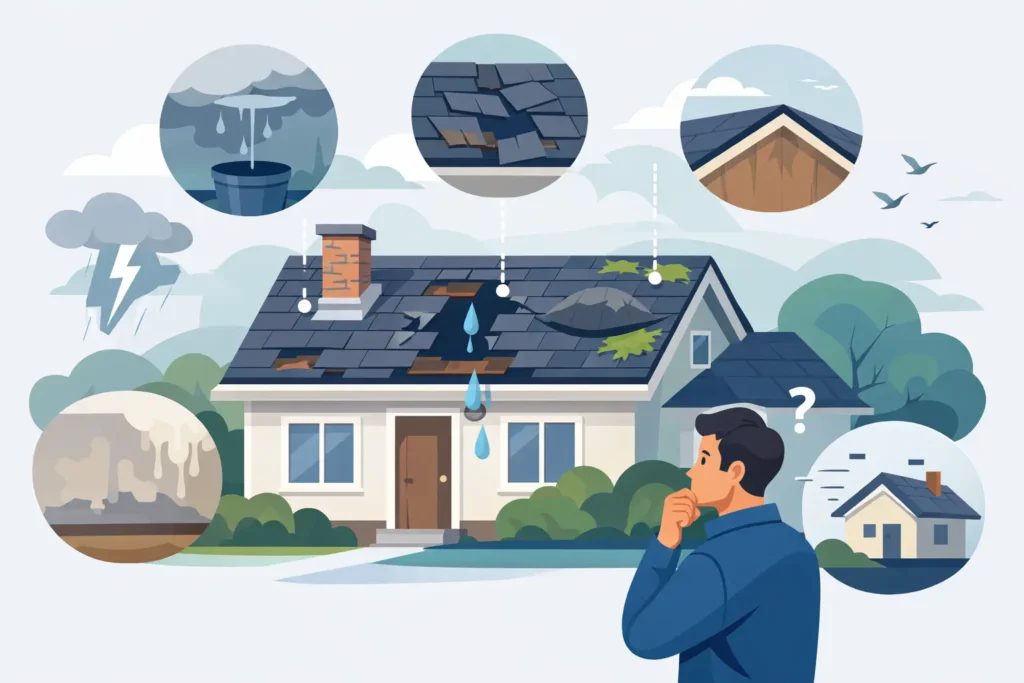
Leaks are another obvious red flag, but they are not always obvious at first. You might notice water spots on the ceiling, peeling paint, musty odors in the attic, or moisture near vents and skylights. Sometimes the leak appears far from the actual source, which is why roof problems can be deceptive. A minor leak may be repairable, but repeated leaks in different areas usually point to a roof system that is wearing out.
Missing, curling, or cracked shingles are also strong indicators. Shingles are designed to create a protective barrier. Once they begin lifting, drying out, or breaking apart, your home becomes more vulnerable to moisture intrusion and sun damage. If large sections look uneven or worn, patchwork repairs may only buy a short amount of time.
Granule loss is another sign homeowners often miss. If you see shingle granules collecting in gutters or around downspouts, your roof may be losing its outer protective layer. Those granules help shield the material from UV exposure. Without them, shingles tend to age faster, and performance drops.
Then there is sagging. A sagging roofline should never be brushed aside as cosmetic. It can signal trapped moisture, damaged decking, or even structural weakness. This is one of the more urgent signs because it suggests the issue goes beyond surface materials.
When repairs are not enough
A lot of homeowners hope a roof can be repaired indefinitely, and in some cases, that is a reasonable approach. If the damage is isolated, the roof is still relatively young, and the rest of the structure is in good condition, a targeted repair may solve the problem.
But there is a point where repeated repairs become the more expensive path. If you are calling for service every season, replacing shingles in different areas, or dealing with recurring leaks, the costs add up without truly restoring confidence in the roof. At that stage, replacement can be the more practical and more cost-effective decision.
It also depends on your bigger plans for the property. If you are updating windows, improving insulation, renovating the exterior, or planning a broader remodel, replacing an aging roof may make sense as part of a complete upgrade. A new roof does more than stop leaks. It improves curb appeal, supports energy efficiency, and helps protect every other investment inside the home.
Signs you need a new roof inside the house
You do not always need to climb onto the roof to spot trouble. In fact, some of the most telling clues show up indoors.
Ceiling stains are a common one, especially after rain. Even if the stain dries, that does not mean the problem is gone. Bubbling paint, warped drywall, or discolored patches near corners and light fixtures can all point to moisture getting in.
Your attic can also tell an important story. If you see damp insulation, mold growth, dark streaks on wood, or daylight coming through the roof boards, your roofing system may be compromised. Poor ventilation can contribute to roof aging too, so an attic inspection often reveals whether the issue is moisture, heat buildup, failing materials, or some combination of all three.
Higher cooling costs may also be connected to roof condition. In Southern California, roof performance matters because heat exposure is constant. If your roof is deteriorating or ventilation is not working properly, your HVAC system may have to work harder to keep the home comfortable.
Southern California conditions can speed up roof wear
Homeowners sometimes assume roofs only fail in places with snow and heavy storms. But Southern California has its own challenges. Intense sun, UV exposure, dry heat, seasonal winds, salt air in coastal areas, and occasional heavy rain all put stress on roofing materials.
That means appearance matters, but performance matters more. A roof can still look acceptable from the ground while the underlayment or flashing is already failing. This is especially true with older tile roofs, where the tile itself may remain intact while the waterproof layers beneath it deteriorate.
If your home has gone through years of hot summers without major roof updates, it is worth taking a more proactive view. Waiting until obvious damage appears can lead to repairs far beyond the roof itself.
What a roof inspection should evaluate
If you suspect a problem, a professional inspection should look at more than just the top layer of material. The condition of shingles or tiles is important, but so are flashing details, penetrations, valleys, gutters, ventilation, underlayment, and decking.
This is where experience matters. The right contractor will not push a replacement when a repair will do, but they also will not minimize signs of widespread failure just to offer a short-term fix. You want a clear assessment of the roof’s remaining life, the extent of current damage, and whether it makes sense to repair, restore, or replace.
At Creative Remodeling 1, that kind of consultative approach is part of how homeowners move forward with confidence. The goal is not just to fix a problem, but to help you make the right investment for your home, your timeline, and your long-term plans.
How to decide if now is the right time
If you are seeing multiple signs at once – aging materials, leaks, visible wear, and rising maintenance needs – delaying usually increases the risk. Water damage rarely stays in one place. It can affect insulation, framing, drywall, flooring, and even electrical systems if left unresolved.
On the other hand, if your roof has one isolated issue and the rest is still in solid condition, repair may still be the right move. That is why timing is not just about urgency. It is about context.
Think about how long you plan to stay in the home, whether you are preparing to sell, and whether other remodeling projects are on the horizon. A new roof can strengthen resale value and buyer confidence, but it also delivers daily peace of mind for homeowners planning to stay put and enjoy their space.
The best time to act is usually before the damage becomes visible in every room below it. A roof replacement may feel like a big step, but so is repairing preventable interior damage after a leak spreads.
Your home should feel protected, efficient, and ready for what comes next. If the warning signs are starting to add up, this may be the right moment to stop patching and start planning for a roof that truly supports the way you live.