
A floor changes more than the look of a room. It changes how your home feels when you walk in, how much maintenance you take on, and how confidently you can invest in the rest of your remodel. When homeowners start weighing hardwood vs laminate flooring, they are usually deciding between two very different priorities – timeless character or everyday practicality.
The right answer depends on how you live, what kind of home you have, and what you want this upgrade to do for your property long term. In Southern California, where style matters but real life moves fast, flooring has to look great and hold up to kids, pets, guests, and daily wear without turning your remodel into a constant upkeep project.
Hardwood vs laminate flooring at a glance
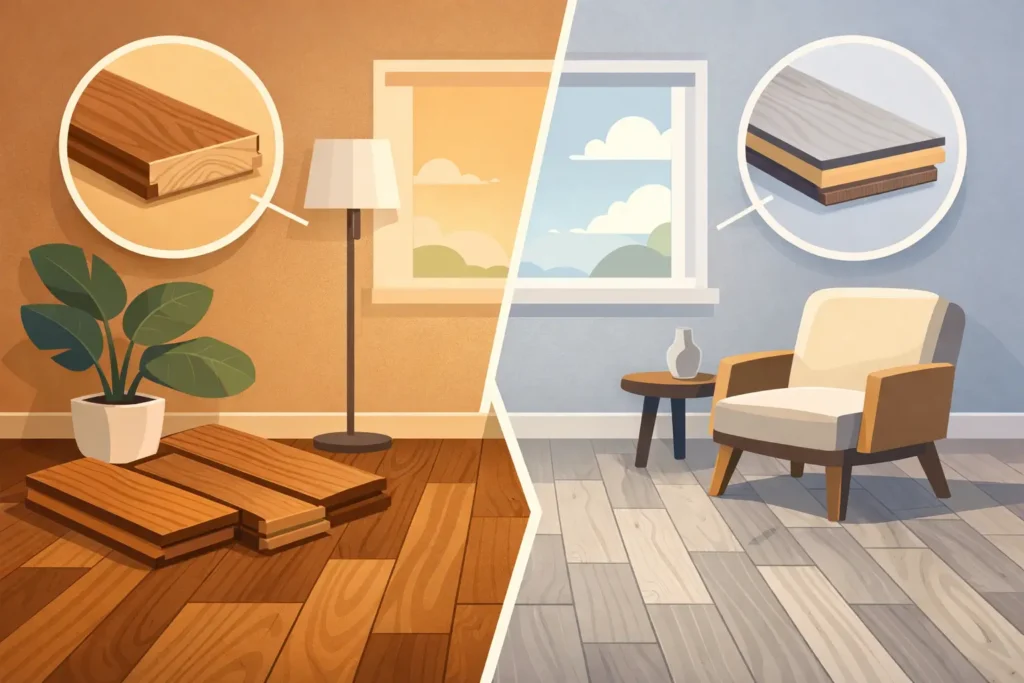
Hardwood is real wood, cut from solid lumber or made as engineered planks with a hardwood veneer on top. It brings natural grain variation, authentic texture, and the kind of richness that many homeowners still see as the gold standard. Laminate, by contrast, is a manufactured product designed to mimic the look of wood with a printed image layer protected by a durable top coating.
That difference shapes almost everything else – price, lifespan, maintenance, moisture resistance, and how the floor ages over time. Hardwood develops character. Laminate is built for consistency. One is usually chosen for long-term value and luxury appeal. The other often wins on budget, scratch resistance, and convenience.
Neither option is automatically better. The better choice is the one that supports your design goals and your day-to-day routine.
Style and first impressions
If your goal is elevated, custom, and unmistakably high-end, hardwood has an edge that laminate still struggles to fully match. Real wood has depth. The grain is not repeated from plank to plank, the color shifts naturally, and the finish catches light in a way that feels warmer and more refined.
That matters in open-concept remodels, especially when flooring connects the kitchen, living room, hallway, and bedrooms. Hardwood can make the whole home feel more cohesive and architecturally grounded. It pairs especially well with modern organic interiors, transitional design, and homes where you want a polished but inviting look.
Laminate has improved quite a bit, though. Higher-quality laminate flooring can look surprisingly realistic, especially from a standing view. For homeowners who want the wood look without the hardwood price tag, it offers strong visual value. In guest rooms, rental properties, upstairs spaces, or family areas where performance is the bigger concern, laminate can absolutely make sense.
The key is being honest about your expectations. If you are the type of homeowner who notices material quality right away, hardwood will likely feel more satisfying. If you want a clean, attractive floor that performs well and helps control the budget, laminate can be a smart design move.
Cost now versus value later
This is where many decisions get made.
Laminate usually costs less to purchase and install than hardwood. That lower upfront cost can free up room in your remodeling budget for cabinetry, lighting, paint, or other finish upgrades. If you are renovating multiple rooms or preparing an investment property, laminate may help you reach your goals faster without sacrificing appearance.
Hardwood requires a bigger initial investment. Material prices are higher, and installation can be more involved. But hardwood often brings stronger long-term value, especially in homes where buyers expect upgraded finishes. It is one of those features people notice, remember, and associate with quality.
There is also the question of lifespan. Hardwood can last for decades if it is installed well and maintained properly. It can also be refinished, which gives it a longer design life. Laminate is more of a finish with a set lifespan. Once it wears out, chips badly, or becomes dated, replacement is usually the next step.
So the financial question is not just what costs less today. It is whether you want a lower-entry solution or a more permanent upgrade that may support resale appeal down the line.
Durability in real homes
Southern California homes are busy. Families move in and out all day, pets run across the floor, and entertaining often extends from indoor living spaces to patios and back again. Flooring has to keep up.
Laminate performs well in active households because its wear layer resists scratches, scuffs, and fading better than many hardwood finishes. If you have dogs, young children, or high-traffic zones that take a beating, laminate may feel like the lower-stress option.
Hardwood is durable too, but in a different way. It can dent, scratch, and show wear over time, especially with softer wood species. For some homeowners, that patina is part of the appeal. For others, every new mark feels like damage. That is an important personality check before you invest.
If your home is more design-focused than rough-and-tumble, hardwood may still be the better fit. If you want fewer worries in a heavily used household, laminate often wins on day-to-day resilience.
Moisture, spills, and room placement
Moisture is one of the biggest dividing lines in the hardwood vs laminate flooring decision.
Traditional hardwood does not love water. Spills need to be cleaned up quickly, and rooms with higher humidity or frequent moisture exposure can create problems over time. Engineered hardwood handles humidity shifts better than solid hardwood, but it still is not the ideal choice for every space.
Laminate is not waterproof by default, but many modern products are better at handling everyday spills than hardwood. That can make laminate attractive for kitchens, entry points, and homes where accidents are likely. Still, standing water can damage laminate if it seeps into the seams, so it is not immune.
This is where room-by-room planning matters. Hardwood may be perfect for living areas, dining rooms, and bedrooms. Laminate may be the practical call for a busy family room or a secondary space that needs durability first. In some remodels, the smartest strategy is not choosing one material for the whole house. It is choosing the right material for each zone.
Maintenance and long-term care
Homeowners often underestimate how much their floor choice affects everyday maintenance.
Hardwood needs a little more care. You will want the right cleaning products, felt pads under furniture, and a habit of wiping up spills quickly. Over time, some floors may benefit from refinishing to restore their appearance. That maintenance is worth it for many homeowners because the material itself is worth preserving.
Laminate is usually easier to live with. Regular sweeping and occasional damp mopping are often enough. It does not need refinishing, and it is generally less demanding. That simplicity appeals to homeowners who want a finished, beautiful space without adding another high-maintenance surface to the house.
If you are remodeling for convenience as much as beauty, laminate deserves serious consideration.
Which flooring works best for your remodel?
The best flooring choice is rarely about the product alone. It is about the project.
If you are creating a forever-home feel, upgrading a main living area, or investing in a premium design transformation, hardwood often delivers the stronger result. It gives the space a custom finish and a level of authenticity that supports a more luxurious vision.
If you are balancing style, budget, and durability in a home that gets heavy daily use, laminate may be the more strategic option. It can still look polished and current while helping you protect your investment across a larger remodel.
Home type matters too. A condo, rental, guest house, or secondary living space may call for practical performance over heirloom materials. A primary residence where aesthetics and resale matter may justify the jump to hardwood. There is no one-size-fits-all answer, and that is exactly why flooring decisions are worth talking through before installation starts.
Hardwood vs laminate flooring: how to decide with confidence
A good rule is to start with three questions. How long do you plan to stay in the home? How much wear will the floor actually see? And what kind of finish level do you want the space to communicate?
If you plan to stay for years and want a result that feels elevated every time you walk through the door, hardwood is hard to beat. If you want strong style with easier upkeep and more breathing room in the budget, laminate can be the smarter fit.
The most successful remodels are not built around trends. They are built around the way you live. That is why flooring should never be chosen in isolation from the rest of the project. It should support your layout, your design direction, and the way you want your home to function every day.
At Creative Remodeling 1, that is the real goal – not just installing a new floor, but helping homeowners choose finishes that make the entire space feel more intentional, more livable, and more rewarding to come home to.
A beautiful floor should do more than fill a room. It should make the rest of your home feel like it finally fits you.