
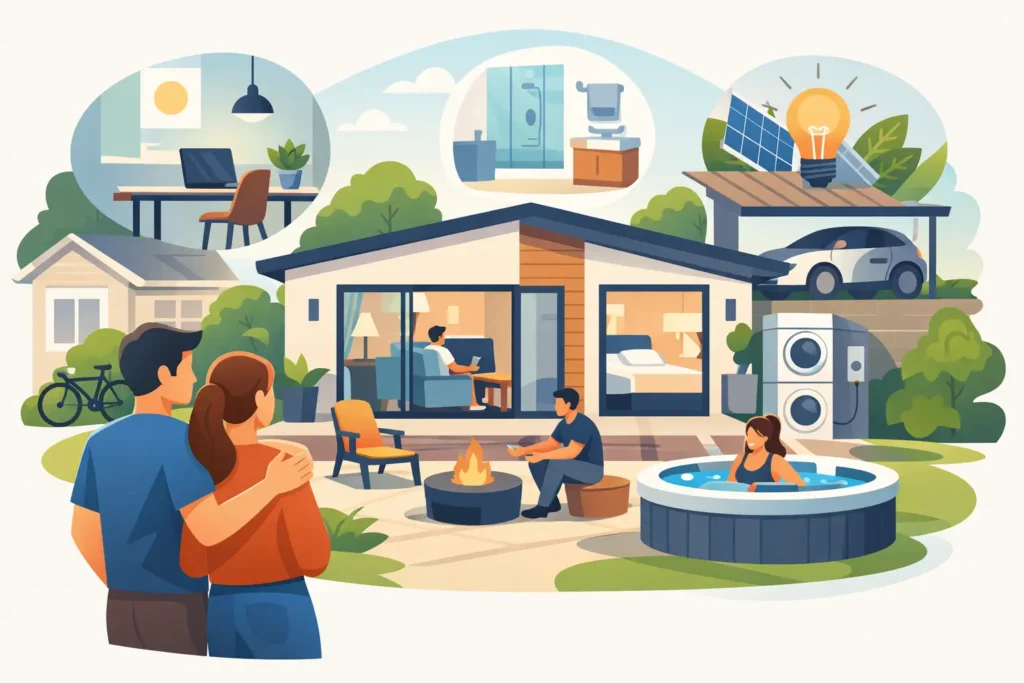
A renter may forget the square footage, but they will remember whether they could sleep through a neighbor’s early morning, store a bicycle without blocking the entry, and come home to a space that feels truly private. The best ADU features for renters are not always the most expensive upgrades. They are the thoughtful details that make a compact home feel calm, functional, and worth renewing.
For Southern California homeowners, a well-designed accessory dwelling unit can create dependable rental appeal while improving the value and versatility of the property. The goal is not to copy a full-size house at a smaller scale. It is to make smart design decisions that give renters the comfort, independence, and everyday convenience they expect.
Best ADU Features for Renters Start With Privacy
Privacy is often the difference between an ADU that attracts inquiries and one that attracts long-term tenants. Renters want to feel at home, not like they are living in someone else’s spare room. A separate, clearly defined entry is essential. It gives the tenant control over their arrival and departure while helping the main household maintain its own routine.
Thoughtful window placement matters just as much. Windows should bring in natural light without creating direct sightlines into the primary home, neighboring yards, or shared outdoor areas. Frosted glass in bathrooms, higher clerestory windows where appropriate, and landscaping that softens shared boundaries can make a meaningful difference without closing the unit off from sunlight.
A private patio, small courtyard, or dedicated outdoor seating area can be especially valuable in Southern California. It does not need to be large. Even a modest, screened area for a chair, small table, and container garden helps an ADU feel like a complete residence rather than an add-on.
A Real Kitchen Wins Over a Bare-Bones Setup
Renters are more likely to stay when they can cook comfortably. A kitchenette may work for a short-term arrangement, but a long-term tenant generally needs a practical kitchen with adequate counter space, durable cabinetry, a full-size or thoughtfully selected apartment-size refrigerator, and reliable ventilation.
The best layouts make every inch work. A single-wall kitchen can be highly efficient when it includes deep drawers, upper cabinets that reach the ceiling, and a landing area beside the sink and cooktop. Open shelving can add visual lightness, but it should not replace the closed storage renters need for pantry goods, dishes, and small appliances.
Choose finishes that look polished but can handle real use. Quartz or other durable countertop materials, easy-clean backsplashes, and quality cabinet hardware give the kitchen a premium feel while reducing maintenance concerns. This is one area where affordable luxury is not about excess. It is about selecting materials that continue to look good after daily cooking, cleaning, and moving in.
Storage Makes a Small ADU Feel Generous
A beautiful ADU can still feel frustrating if renters have nowhere to put luggage, cleaning supplies, linens, or seasonal clothing. Storage deserves attention from the first design conversation, not as an afterthought once walls are already framed.
Start with a proper bedroom closet. A reach-in closet with adjustable shelving and hanging space is more useful than a shallow decorative wardrobe. In the living area, built-in cabinets or a media console can keep daily items organized without crowding the room. Bathroom vanities with drawers, recessed medicine cabinets, and linen storage create a cleaner, more functional routine.
If the ADU includes a laundry area, place it near additional utility storage whenever possible. Stackable laundry can save valuable floor space, but the surrounding area should still allow room for detergent, towels, and a hamper. For garage conversions, this level of planning is particularly important because the original space may not have been designed around residential storage needs.
Comfortable Climate Control Is a Rental Essential
Southern California renters expect a home that stays comfortable through hot afternoons, cool evenings, and occasional temperature swings. A high-quality ductless mini-split system is often an excellent choice for an ADU because it provides both heating and cooling without requiring extensive ductwork. It also allows renters to control their own indoor comfort.
Still, equipment alone cannot solve poor design. Proper insulation, air sealing, energy-efficient windows, and window coverings help maintain a stable temperature and reduce utility costs. These upgrades also improve sound control, which supports the privacy tenants value.
Ceiling fans are a practical addition in bedrooms and living areas. They can make the space feel cooler while reducing reliance on air conditioning. When choosing fixtures, prioritize quiet performance and a design that complements the ADU’s overall style. Small choices like these signal quality without overwhelming a compact floor plan.
Laundry and Utilities Should Be Simple, Not Shared Stress
Shared laundry is not always a deal-breaker, but private in-unit laundry can significantly strengthen an ADU’s appeal. It saves renters time, eliminates scheduling conflicts, and adds the everyday convenience that encourages longer leases. Even in a small unit, a stacked washer and dryer can often fit into a hallway closet, bathroom niche, or kitchen-adjacent utility cabinet.
Clear utility arrangements are equally important. Whether utilities are separately metered, included in rent, or allocated through an agreed-upon method, the setup should be easy to understand. Renters appreciate predictable costs, and homeowners benefit from fewer misunderstandings after move-in.
Reliable internet access is another modern necessity. An ADU should be planned with strong Wi-Fi coverage or dedicated service options in mind, especially for remote workers. Pre-wiring during construction is far more polished than trying to solve connectivity problems after the walls are finished.
Flexible Layouts Appeal to More Qualified Renters
The strongest ADU designs avoid overly narrow definitions of how a renter should live. A one-bedroom unit may attract a professional, a couple, a graduate student, or someone working from home. A studio can feel more adaptable with a clearly defined sleeping zone, a built-in desk, or room for a compact dining table.
Consider where a tenant will work, eat, relax, and host a friend. A fold-down desk or dedicated work nook can be more useful than an oversized kitchen island. Likewise, a flexible living room wall may accommodate a small sofa, bookcase, and workstation better than a layout built around one large piece of furniture.
This does not mean every ADU needs built-ins everywhere. Too many fixed elements can limit furniture choices. The right balance depends on the unit’s size, expected rental market, and whether the homeowner plans to rent furnished or unfurnished.
Security and Access Build Everyday Confidence
Renters want a home that feels secure from the moment they arrive. Good exterior lighting at the entry, along pathways, and near parking areas improves both safety and curb appeal. Motion-sensor lighting can be useful in side yards or less frequently used access routes, while warm, consistent fixture lighting creates a more welcoming front door.
A smart lock or keypad entry can simplify move-ins and key changes between tenants. It is a convenient feature, but it should be paired with a secure door, quality deadbolt, and well-designed exterior visibility. If the ADU has a gate or separate path, make sure it is intuitive to use and does not require the tenant to cross through private areas of the main home.
Parking depends on the property and local requirements, but it deserves an honest assessment. A dedicated parking spot is a major advantage in many Southern California neighborhoods. When on-site parking is not available, clear access and realistic street-parking expectations are better than overpromising.
Finish the ADU Like a Home, Not a Conversion
Renters notice the difference between a space that was simply made habitable and one that was designed with care. Consistent flooring, attractive lighting, solid interior doors, and a cohesive color palette give an ADU a finished, intentional character. These details help justify stronger rental interest without relying on flashy upgrades that may not hold up over time.
Durability should guide every selection. Luxury vinyl plank flooring can offer a warm wood-look surface with easier maintenance. Washable paint, quality bathroom tile, and dependable fixtures help protect the investment while keeping the home appealing between tenants. Creative Remodeling 1 approaches ADU projects with this balance in mind: custom design choices that feel elevated, paired with practical construction decisions that support daily living.
The most successful ADU is one that respects both sides of the rental relationship. It gives tenants a private, comfortable place to build their routine, and it gives homeowners a well-crafted asset that is easier to market and maintain. Start by imagining a renter’s ordinary Tuesday, not just their first walkthrough. If the space makes that everyday experience easier, it is built to stand out.