
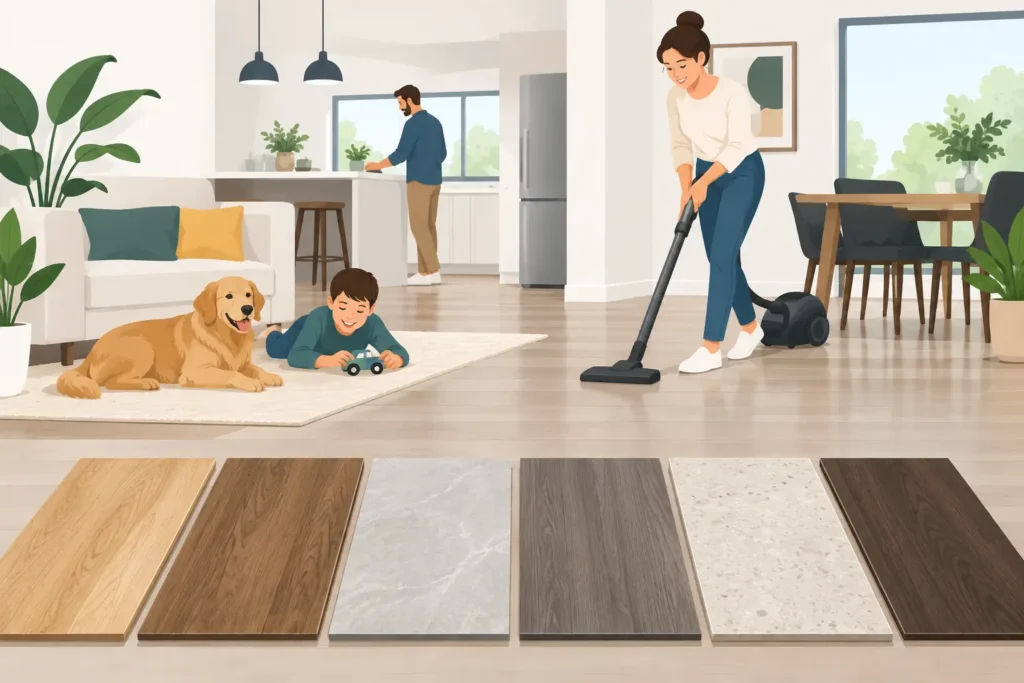
A beautiful floor has to do more than look good in a showroom. It has to handle rushed school mornings, wet paws, dropped pans, sandy shoes, dinner spills, and the constant movement that makes a home feel alive. The best flooring for busy households balances everyday durability with a finish that supports the way you want your home to look and feel.
For Southern California homeowners, the right decision also depends on sunlight, indoor-outdoor living, room layout, and whether the project includes a kitchen remodel, whole-home renovation, garage conversion, or ADU. There is no single material that wins in every situation. The best choice is the one that fits your daily routine without asking you to compromise on design.
What Busy Homes Need From Their Floors
High-traffic flooring should be easy to live with, not another item on the weekend chore list. That usually means a surface that resists scratches, tolerates moisture, cleans up quickly, and does not show every footprint. But performance is only part of the equation. Flooring covers a major visual area, so its color, texture, plank size, and transition into other rooms shape the entire renovation.
Start by considering where the heaviest activity happens. A family kitchen with a door to the backyard has very different needs than a second-floor bedroom or a rental ADU. Pets, young children, frequent guests, and a pool all raise the priority of water resistance and easy cleanup. Strong sun exposure may make fade resistance and a lighter, more stable finish especially valuable.
Best Flooring for Busy Households: Start With These Materials
Luxury Vinyl Plank Offers Everyday Versatility
Luxury vinyl plank, often called LVP, is one of the strongest all-around choices for active homes. It can create the warm appearance of natural wood while offering a wear layer designed for scratches, scuffs, and daily traffic. Many quality products also have water-resistant or waterproof construction, which makes them especially practical in kitchens, entryways, family rooms, and laundry areas.
LVP is comfortable underfoot and quieter than tile, a welcome benefit in open-concept homes where sound travels. Its wide range of colors and wood-look patterns makes it easy to coordinate with modern cabinets, countertops, and doors. For homeowners who want one continuous surface through much of the home, it delivers a polished look without the maintenance demands of solid hardwood.
The trade-off is quality. Lower-grade vinyl can look repetitive, feel thin, or dent under very heavy furniture. Selecting a product with a substantial wear layer and having the subfloor properly prepared are essential to getting a refined, long-lasting result.
Porcelain Tile Is Built for Water, Heat, and Heavy Use
Porcelain tile is a smart investment for rooms that see frequent moisture and mess. It performs exceptionally well in bathrooms, kitchens, mudroom-style entries, and homes with direct access to patios or pools. It will not swell after a spill, and high-quality porcelain stands up beautifully to pet nails, moving furniture, and everyday wear.
Today’s porcelain options go far beyond traditional tile looks. Large-format stone visuals, warm wood-look planks, soft concrete finishes, and textured natural styles can give a room a high-end, tailored appearance. For a Southern California home, porcelain is also a natural fit for connecting indoor spaces with exterior entertaining areas.
Its main consideration is comfort. Tile is harder and cooler underfoot than vinyl or wood, which may not suit every living room or bedroom. Area rugs can soften gathering spaces, while radiant heating can add comfort during cooler months. Proper installation matters as well, particularly with large-format tile, because a level substrate and clean grout lines make all the difference in the finished look.
Engineered Hardwood Brings Lasting Warmth
For homeowners who love the authentic character of wood, engineered hardwood offers a more practical path than solid hardwood in many busy homes. It has a real hardwood veneer over a layered core, giving it the visual depth and texture that manufactured wood-look materials cannot completely duplicate.
Engineered hardwood works beautifully in living rooms, dining rooms, bedrooms, hallways, and open main-floor spaces where a sense of warmth is central to the design. Wider planks and matte finishes are particularly effective at hiding small signs of daily life while creating a modern, elevated feel.
This material is not the best fit for every wet zone. While many engineered wood products handle normal humidity changes better than solid wood, standing water and repeated saturation can still cause damage. It is better suited for areas where spills are addressed promptly rather than bathrooms, laundry rooms, or entrances that regularly receive wet shoes. Choosing a durable finish and using protective pads under furniture helps preserve the surface.
Laminate Can Be a Practical Value Choice
Modern laminate has improved considerably in appearance and performance. It can provide a convincing wood-look floor at a budget-friendly price point, and its protective top layer often performs well against scratches. That makes it an appealing choice for bedrooms, hallways, playrooms, and income-generating spaces where a cohesive upgrade matters.
Water resistance varies widely by product. Some newer laminate floors are designed to withstand surface spills for a limited time, but they should not be treated like porcelain or fully waterproof vinyl. If moisture reaches the seams or core, swelling may occur. For that reason, laminate is best used in drier rooms and paired with realistic expectations about maintenance.
Natural Stone Makes Sense in Select Areas
Natural stone creates an unmistakably luxurious finish, especially in entryways, bathrooms, fireplaces, and homes with a Mediterranean, transitional, or contemporary design direction. Travertine, marble, limestone, and slate each bring unique movement and color variation that can make a renovation feel one of a kind.
However, stone asks more of the homeowner. Many varieties require sealing, and softer stones may etch or stain when exposed to acidic spills. Honed finishes and appropriate sealers can make stone more forgiving, but porcelain often delivers a similar visual impact with easier care. Natural stone is best chosen because you love its character and are comfortable with its maintenance needs.
Carpet Still Has a Place in a Family Home
Carpet is rarely the first choice for high-traffic common areas, but it remains valuable in bedrooms, upstairs spaces, and media rooms. It adds softness, warmth, and sound control, all of which can improve comfort in a busy household. A low-pile, stain-resistant carpet in a medium tone is generally more practical than a plush, light-colored option.
For homeowners with allergies or pets, carpet may need more frequent care than hard flooring. Still, using it selectively can create a quieter, more comfortable home without putting it in the line of fire near food, water, and exterior doors.
Choose Flooring Room by Room, Not Just Material by Material
The most successful remodels often combine materials instead of forcing one flooring type into every room. Porcelain tile may be ideal near a pool entrance or in a bathroom, while LVP carries through the main living areas and engineered hardwood brings warmth to a formal dining room or primary suite. Thoughtful transitions allow each space to perform well while keeping the overall design connected.
Color selection deserves the same attention as material selection. Very dark floors can show dust and pet hair quickly, while extremely light floors may reveal muddy footprints. Mid-tone woods, warm greiges, natural oak visuals, and softly varied tile patterns are often the most forgiving choices for real life. Matte and low-sheen finishes also hide minor scratches better than glossy surfaces.
When planning a larger renovation, flooring should be selected alongside cabinetry, wall color, countertops, lighting, and doors. This creates a complete design story rather than a collection of individual upgrades. It also helps avoid costly changes once construction is underway.
A Better Floor Starts With Better Planning
A floor performs only as well as the preparation beneath it. Moisture testing, subfloor leveling, proper underlayment, and accurate transitions are not the exciting parts of a remodel, but they protect the investment and improve the final appearance. Experienced design-and-build guidance can help homeowners compare samples in their own lighting, understand realistic maintenance needs, and select a material that suits both the room and the budget.
Creative Remodeling 1 approaches flooring as part of the bigger picture: a home that feels more functional, more personal, and ready for the life happening inside it. The right surface should support family routines, welcome guests, and make every room feel intentionally finished.
Choose the floor you will be happy to see after a long day – not just the one that looks perfect before anyone has lived on it.