
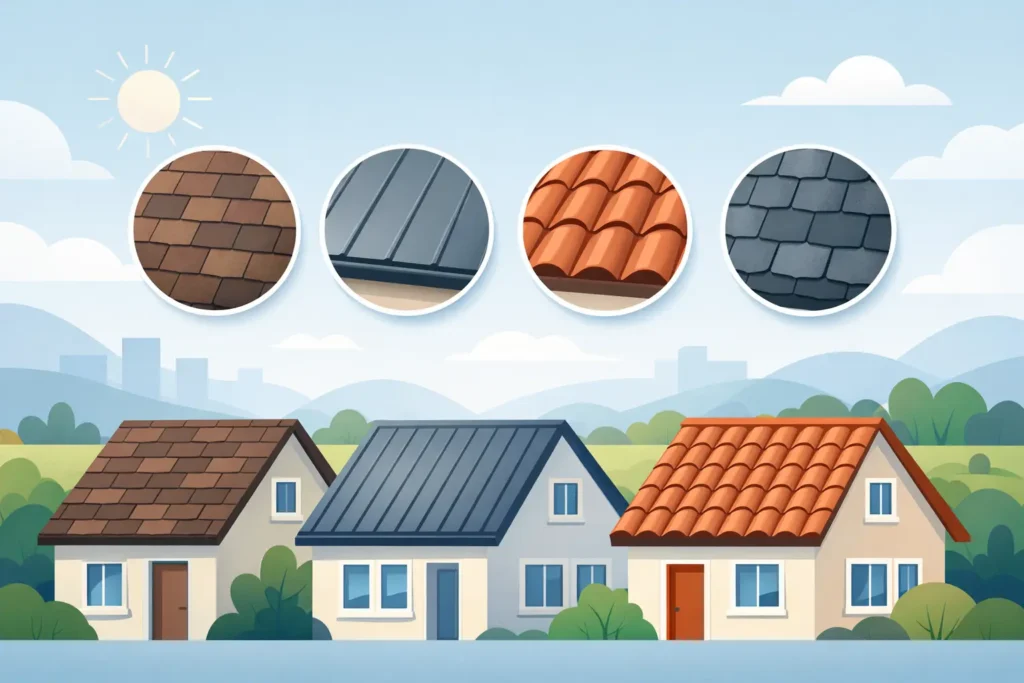
A roof replacement changes more than the view from the curb. It affects how your home handles Southern California heat, seasonal rain, wind, fire requirements, and rising energy costs. The best roofing materials for homes are not always the most expensive or the most popular – they are the materials that fit your architecture, budget, neighborhood requirements, and long-term plans for the property.
For a homeowner planning a major renovation, roofing is also an opportunity to create a more complete exterior transformation. The right roof can make new windows, updated stucco, fresh paint, and landscaping feel intentional rather than pieced together. Here is how to compare the leading options with confidence.
What Makes a Roofing Material Right for Your Home?
Before choosing a color or requesting estimates, consider the practical conditions your roof needs to manage. Southern California homes experience intense sun exposure, dry conditions, occasional heavy rain, coastal moisture in some areas, and wildfire risk in many communities. Local building codes, HOA guidelines, roof pitch, and the structure’s ability to carry weight can narrow the field quickly.
Your timeline matters, too. A homeowner renovating a forever home may place a premium on longevity and architectural character. Someone improving a rental property or preparing to sell may prioritize dependable performance, broad buyer appeal, and a more controlled upfront investment.
Installation quality deserves equal attention. Even premium materials can underperform if flashing, ventilation, underlayment, drainage, and roof penetrations are handled poorly. A well-designed roofing project considers the entire system, not just the visible surface.
Best Roofing Materials for Homes in Southern California
Asphalt Shingles: Versatile and Budget-Conscious
Asphalt shingles remain one of the most widely selected roofing materials because they offer an attractive balance of cost, design flexibility, and reliable performance. Available in a wide range of colors and profiles, architectural shingles can give a home more dimension than basic three-tab options while complementing traditional, transitional, and contemporary exteriors.
This material is often a smart choice for homeowners who want a polished result without the higher investment associated with tile, slate, or premium metal. It is also lighter than tile, which can simplify planning for homes that were not designed to carry a heavier roof system.
The trade-off is lifespan. Asphalt generally does not last as long as metal or tile, especially on roofs that receive relentless direct sun. Material quality, ventilation, and installation all influence how well it ages. For many homes, however, a high-quality architectural shingle is a practical, appealing investment.
Concrete and Clay Tile: Classic California Character
Tile roofing has a natural place in Southern California. Clay tile brings warmth, texture, and timeless character to Spanish, Mediterranean, and mission-style homes. Concrete tile offers a similarly substantial appearance in a broader range of profiles, including options designed to resemble wood shake or slate.
Both materials are known for long service lives when professionally installed and maintained. Their visual impact can also be significant, especially on a home with updated exterior finishes, new doors, and refined landscaping. Tile can elevate an ordinary roofline into a defining architectural feature.
Weight is the key consideration. Tile is substantially heavier than asphalt shingles, so the existing roof structure may need evaluation before installation. Individual tiles can also crack from impact or foot traffic, making experienced installation and thoughtful maintenance essential. For homeowners who value enduring curb appeal, tile often delivers a luxurious result that feels right at home in the region.
Metal Roofing: Modern, Durable, and Energy-Aware
Metal roofing has moved far beyond the industrial look many homeowners imagine. Standing-seam metal panels create clean, modern lines that suit contemporary remodels, while metal shingles and stone-coated metal products can work with more traditional home styles.
Its appeal comes from durability, low maintenance needs, and strong performance under sun exposure. Reflective finishes can help reduce heat absorption, an especially welcome advantage during hot Southern California summers. Metal roofs are also lightweight compared with tile and can be a compelling option for homeowners seeking a long-term solution.
The higher initial cost is the main hurdle. Rain noise is another concern homeowners sometimes raise, though proper roof deck construction and insulation can reduce that effect considerably. Metal roofing is best viewed as a long-term investment: it may cost more at the beginning, but its longevity and visual distinction can make it worthwhile for the right home.
Composite Roofing: High-End Style Without the Weight
Composite roofing is designed to replicate the appearance of slate, cedar shake, or traditional tile while avoiding some of the weight, maintenance, or fragility of natural materials. It gives homeowners greater freedom to achieve a high-end architectural look without asking the existing structure to support heavy stone or clay.
This option can be particularly appealing for exterior remodels that call for a specific design direction. A composite slate roof can add sophistication to a traditional property, while composite shake can bring texture to a modern farmhouse-inspired renovation without the maintenance demands of real wood.
As with any specialty product, quality varies. The best results come from selecting a reputable material and working with a contractor who understands the manufacturer’s installation requirements. While composite products typically cost more than asphalt, they can provide a strong middle ground between luxury appearance and practical performance.
Wood Shake and Shingle: Beautiful, but Often a Complicated Choice
Natural wood shake has undeniable character. It offers depth, warmth, and a handcrafted feel that few manufactured materials can fully recreate. On the right home, it can be striking.
For many Southern California properties, though, wood requires careful consideration because of fire regulations, maintenance expectations, and weather exposure. Some jurisdictions and insurance providers have stricter requirements for wood roofing, particularly in high fire hazard areas. Treatments and approved assemblies may be available, but homeowners should verify local requirements before falling in love with the look.
If you want the texture of shake with less ongoing concern, composite or metal alternatives can deliver a similar design statement with a more practical ownership experience.
Match the Roof to Your Home’s Architecture
A roofing material should support the home’s overall design rather than compete with it. A low-profile metal roof can sharpen the lines of a contemporary renovation. Clay tile may be the natural choice for a Spanish-style home with arched openings and warm stucco. Architectural shingles often work beautifully on Craftsman, ranch, and traditional homes where balance and versatility matter most.
Color selection deserves the same care. Lighter shades can complement modern exteriors and help limit heat gain, while darker tones create contrast and visual depth. The roof occupies a large percentage of what people see from the street, so its color should be considered alongside the garage door, trim, siding, stone, and window frames.
A design-and-build approach is especially valuable when roofing is part of a larger exterior update. Instead of choosing materials in isolation, homeowners can make decisions that create one cohesive vision for the property.
Do Not Overlook Ventilation, Underlayment, and Drainage
The visible material gets most of the attention, but the components underneath it determine much of the roof’s performance. High-quality underlayment provides another layer of protection against water intrusion. Proper flashing protects the vulnerable areas around chimneys, skylights, walls, and vents. Adequate attic ventilation helps manage moisture and heat buildup.
Drainage planning is equally important. Even in a region known for sunny weather, heavy rain events can expose weak spots quickly. Gutters, downspouts, roof slope, and transitions between roof sections should all direct water away from the home effectively.
This is where craftsmanship makes a real difference. A roof should look beautiful on installation day, but it should also perform reliably years later when weather conditions test every detail.
How to Make a Smart Final Choice
Start by identifying your priorities: budget, longevity, energy performance, architectural style, and maintenance level. Then assess the home itself, including roof pitch, structural capacity, local fire requirements, and any HOA restrictions. A material that looks ideal in a showroom may not be the right fit for your specific roofline.
Ask to see material samples in natural light and view full homes with comparable roofing whenever possible. Small samples can look very different once installed across a large surface. It is also wise to discuss warranty coverage, the condition of the roof deck, and whether old materials will be removed or installed over.
At Creative Remodeling 1, we help homeowners see roofing as part of a larger opportunity to improve comfort, protection, and curb appeal. The strongest choice is the one that respects your budget today while supporting the way you want your home to look and perform for years ahead.