
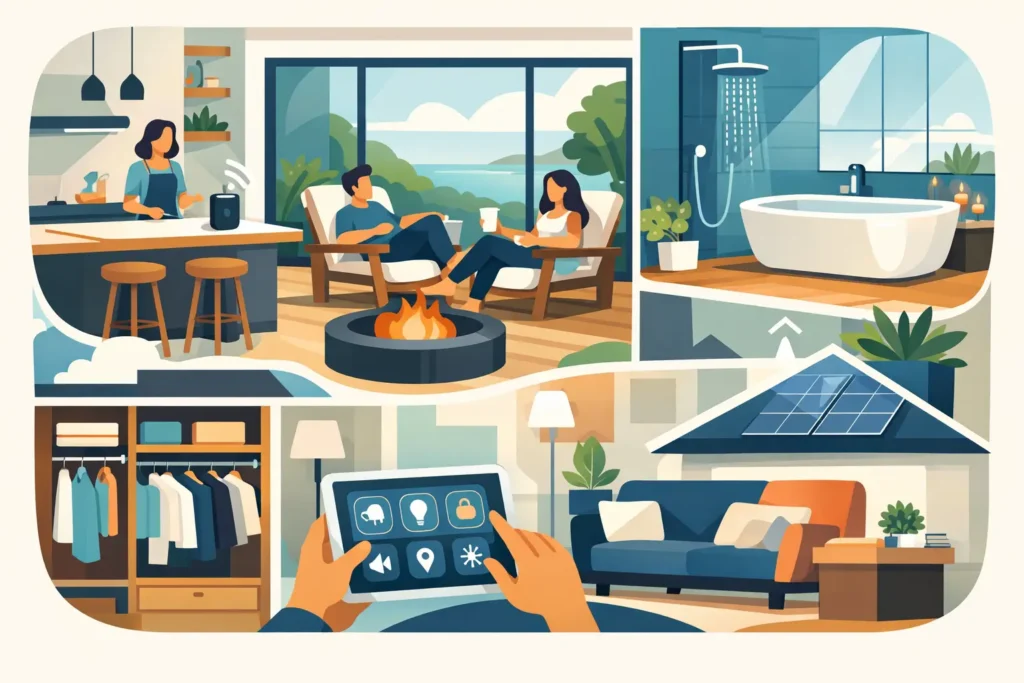
A home can look dated long before it stops working. The real reason homeowners are investing now is often more personal: the kitchen feels too closed off for family life, the bathroom never offers a quiet reset, or a garage sits unused while space is at a premium. The most meaningful home remodeling trends are not about chasing a passing look. They are about creating rooms that feel better to live in, work in, host in, and come home to.
For Southern California homeowners, the strongest design choices balance visual impact with everyday practicality. Sunlight, indoor-outdoor living, growing households, multigenerational needs, and long-term property value all shape the decisions worth making.
Home Remodeling Trends Centered on Real Life
Flexible spaces are replacing single-purpose rooms
Homes are being asked to do more. A spare bedroom may need to welcome guests, serve as a focused work area, and offer storage without feeling crowded. A dining room may be more valuable as a home office, playroom, or extension of the kitchen. The best remodels begin by looking at how a household actually moves through the home, rather than preserving a layout simply because it has always been there.
This does not always mean removing every wall. Open-concept living remains popular, especially for kitchens and family rooms, but fully open layouts can create challenges with noise, privacy, and storage. Many homeowners are choosing a more tailored middle ground: widened openings, glass partitions, pocket doors, built-in cabinetry, or a kitchen island that connects spaces while still giving each area a purpose.
Kitchens are becoming warmer and more hardworking
The all-white kitchen still has a place, but warmer, more dimensional finishes are leading the conversation. Natural wood tones, soft taupe cabinetry, muted greens, textured tile, and stone-look surfaces add character without making a kitchen feel overly busy. These choices work especially well in homes where the kitchen is the center of both daily routines and entertaining.
Function is receiving equal attention. Deep drawers, concealed trash pullouts, walk-in pantries, appliance garages, charging drawers, and well-planned islands help keep counters clear and cooking more enjoyable. A large island can be a standout feature, but it needs enough circulation space around it to work. In a compact kitchen, improving the cabinet layout and storage strategy may deliver more value than forcing in an oversized island.
Layered lighting is another high-impact upgrade. Recessed lighting provides overall brightness, pendants bring personality over an island, and under-cabinet lighting makes prep work easier while creating a welcoming glow at night. The result is a kitchen that feels polished without sacrificing comfort.
Bathrooms are designed as private retreats
Homeowners increasingly want bathrooms that feel calm, clean, and easy to maintain. Walk-in showers with frameless glass, large-format tile, floating vanities, and thoughtful niche storage remain popular because they make a bathroom look more open while simplifying daily use.
A spa-inspired bathroom does not require every luxury feature. In some homes, a generous shower with a bench, quality fixtures, improved ventilation, and lighting at the mirror will make a bigger difference than a freestanding tub that rarely gets used. For others, especially in a primary suite, a soaking tub is exactly the right investment. The decision should reflect how the household relaxes, not what looks best in a photo.
Aging-in-place features are also becoming part of smart bathroom design. Curbless shower entries, wider doorways, secure grab-bar blocking behind finished walls, and easy-to-reach controls can be integrated beautifully from the start. These details support long-term comfort without making the room feel clinical.
Indoor-outdoor connections are more intentional
Southern California’s climate makes outdoor living one of the most valuable extensions of a home. Homeowners are opening up rear walls with large sliding or folding glass doors, upgrading patios, and designing covered areas that support dining, lounging, and weekend gatherings.
The goal is not simply adding more glass. It is creating a smooth transition between interior and exterior spaces. Flooring selections, door placement, shade structures, outdoor lighting, and views from the kitchen or family room all influence whether the connection feels natural. High-performance windows and doors can also improve comfort by helping manage heat, glare, and outside noise.
Exterior upgrades should be considered as part of the full picture. Fresh siding or stucco, a new roof, updated entry doors, modern house numbers, and intentional landscape lighting can make an older home feel newly composed before anyone steps inside.
ADUs and Garage Conversions Create Useful Space
Accessory dwelling units and garage conversions continue to be among the most practical home remodeling trends for local property owners. Depending on the property and local requirements, these projects can create a private suite for family members, a dedicated workspace, a guest retreat, or a potential rental opportunity.
The strongest conversions feel like complete living spaces, not leftover square footage with a few finishes added. Natural light, ventilation, insulation, plumbing planning, storage, and a functional bathroom or kitchenette all matter. A design-and-build approach is especially valuable here because the early design choices must align with structural needs, permitting, utility connections, and the intended use of the space.
There are trade-offs to consider. Converting a garage may reduce covered parking and storage, while building a detached ADU can require a larger budget and more site work. Still, when the project solves a genuine space problem, it can change how a property serves its owners for years to come.
Sustainable choices now focus on comfort and durability
Homeowners are looking beyond surface-level upgrades toward improvements that reduce waste, improve efficiency, and hold up over time. Energy-efficient windows, insulated doors, upgraded roofing, water-saving fixtures, and durable flooring are appealing because they can improve everyday comfort as well as lower maintenance demands.
Material selection matters. A beautiful finish that scratches easily or requires specialized care may not be the right fit for a busy family, pets, or a rental property. Porcelain tile, quality engineered wood, quartz surfaces, and performance fabrics are popular not just for appearance, but because they offer a realistic balance of style and resilience.
Sustainability is rarely one dramatic decision. It is the combined effect of choosing quality products, planning for the home’s climate, reducing future repairs, and avoiding design decisions that will feel tired in a few years.
Personalized details make a remodel feel custom
The most shareable remodels often have one thing in common: they do not look copied from a showroom. Custom range hoods, statement tile, built-in window seating, mixed metal finishes, tailored storage, and a carefully selected front door can give a project a distinct point of view.
Personalization works best when it has a purpose. A bold backsplash can bring energy to a neutral kitchen. Built-in cabinetry can turn an awkward wall into useful storage. A mudroom-style drop zone near an entry can make daily arrivals far less chaotic. These details earn their place when they support the way a household lives.
That is also why trend-driven decisions deserve a measured approach. It is fine to choose a color or finish you love, but the expensive elements of a remodel – flooring, cabinetry, plumbing layout, windows, and roofing – should have staying power. Bring personality into areas that can be refreshed more easily over time.
Start With the Life You Want at Home
A successful remodel is not a collection of popular features. It is a clear response to what is not working now and what would make the home more enjoyable in the years ahead. Before selecting tile or cabinet colors, think about morning routines, storage frustrations, guests, privacy, work-from-home needs, and how you want each space to feel.
Creative Remodeling 1 helps homeowners turn those conversations into cohesive design-and-build plans, with craftsmanship and practical execution guiding every stage. The right trend is the one that gives your home more comfort, more function, and a stronger sense that it was designed for you.