
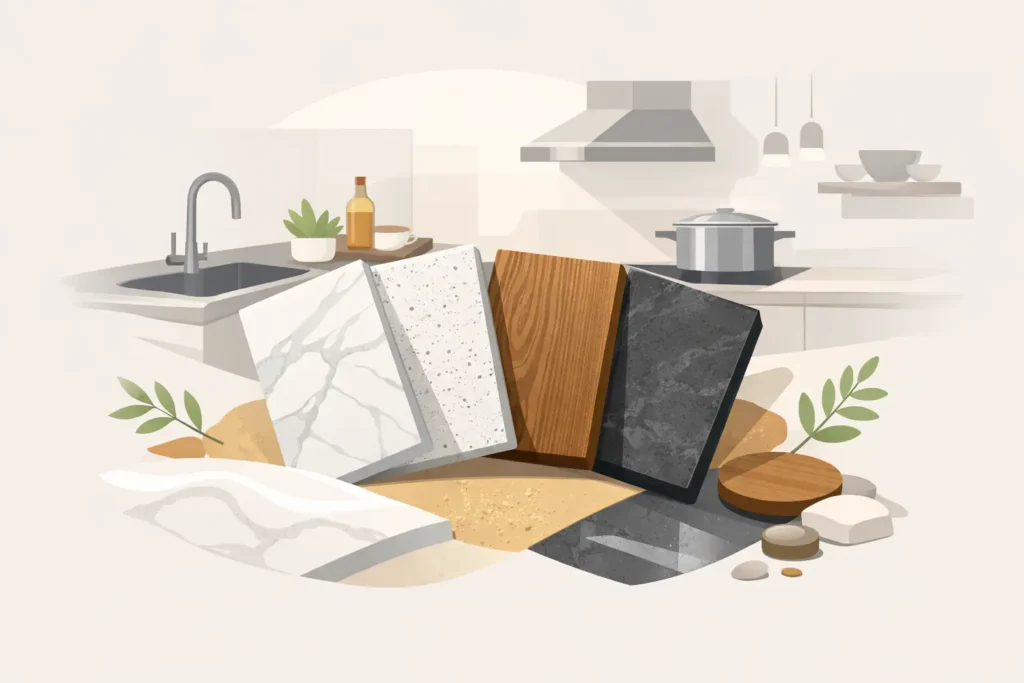
A countertop has to do more than look beautiful in a showroom. It becomes the surface where weeknight dinners come together, kids finish homework, guests gather with a glass of wine, and morning routines begin. Choosing among the best kitchen countertop materials means balancing the look you love with the maintenance, durability, budget, and lifestyle your home needs.
For Southern California homeowners, the right choice often comes down to how you use your kitchen. A busy family kitchen needs a different surface than a sleek condo kitchen designed for entertaining. The best remodels do not chase one-size-fits-all trends. They pair the right material with a thoughtful layout, cabinetry, lighting, and the way you want to live in the space.
Best Kitchen Countertop Materials for Real Life
Quartz, natural stone, porcelain, wood, laminate, solid surface, concrete, and stainless steel all bring something different to a kitchen remodel. There is no universal winner, but there is usually a clear best fit once your priorities are defined.
Start by deciding what matters most. If low maintenance is non-negotiable, engineered surfaces may be ideal. If you want a one-of-a-kind statement, natural stone offers character that cannot be replicated. If affordability is leading the conversation, modern laminate can deliver a major visual upgrade without consuming the entire remodeling budget.
Quartz: The Favorite for Low-Maintenance Luxury
Quartz remains one of the most requested countertop options for good reason. It is an engineered material made with natural quartz minerals and resins, creating a nonporous surface that resists stains and does not require regular sealing. It is available in an impressive range of colors and patterns, from clean, solid whites to dramatic veining inspired by marble.
For homeowners who want an elevated kitchen without worrying about wine spills, citrus juice, or frequent upkeep, quartz is a strong choice. It works especially well in active households and open-concept kitchens where the countertop is visible from the living space.
The trade-off is that quartz can be sensitive to extreme heat. A hot pan placed directly on the surface may cause damage, so trivets are still necessary. It can also carry a premium price, particularly for designer patterns and thicker slab profiles. Still, its long-term performance and polished appearance make it a smart investment for many remodels.
Granite: Natural Beauty With Proven Durability
Granite has remained popular through changing kitchen trends because every slab is naturally unique. Its movement, mineral specks, and color variation create depth that manufactured materials cannot completely duplicate. When properly sealed, granite is highly durable and handles everyday use well.
This material works beautifully for homeowners who want a natural, substantial look without the softer feel of marble. Darker granites can ground a bright white kitchen, while lighter slabs can complement warm wood cabinetry or modern flat-panel designs.
Granite does require periodic sealing to help protect against stains and moisture. The exact maintenance schedule depends on the slab and sealant, but it is a consideration worth making before selection. It is also important to view the actual slab, not just a small sample, because the color and pattern can vary considerably.
Marble: A Statement Surface With a Softer Side
Few materials create the visual impact of real marble. Its graceful veining and luminous finish can make a kitchen feel custom, timeless, and unmistakably luxurious. Marble is especially appealing for homeowners drawn to European-inspired kitchens, classic architecture, or a dramatic waterfall island.
It also comes with honest trade-offs. Marble is more porous and softer than quartz or granite, which means it can stain, etch, or scratch more easily. Acidic ingredients such as lemon juice, vinegar, and tomato sauce can leave dull marks on a polished finish. Some homeowners appreciate the patina that develops over time, while others find it stressful.
Marble may be best used in a lower-impact area, such as a baking station, beverage bar, or statement island, while a more resilient material handles the main prep zone. This approach allows you to enjoy the beauty of marble without asking it to perform beyond its comfort zone.
Quartzite: Natural Stone for High-Impact Kitchens
Quartzite is often confused with quartz, but the two are very different. Quartzite is a natural stone, formed under intense heat and pressure, with a hard surface and often dramatic marble-like movement. It gives homeowners the organic beauty of stone with greater scratch resistance than marble.
For a high-end kitchen where natural variation is part of the design vision, quartzite can be an exceptional choice. It is particularly striking on large islands, full-height backsplashes, and waterfall edges.
Like other natural stones, quartzite generally needs sealing and should be selected carefully. Some slabs are denser and more durable than others, and names used by suppliers can sometimes be confusing. Working with an experienced design-and-build team helps ensure the material suits the intended application, not just the inspiration photo.
Porcelain: Modern, Durable, and Heat Resistant
Porcelain slabs are gaining attention in contemporary kitchen design. They can be made to resemble natural stone, concrete, metal, or even wood, but offer a lightweight, nonporous, highly heat-resistant surface. Porcelain also resists UV fading, which makes it an appealing option for kitchens that open to patios or receive strong Southern California sunlight.
Its slim profile creates a crisp, modern look, and it can often continue from countertop to backsplash for a clean, cohesive design. Porcelain is resistant to stains and scratches, making it a practical choice for homeowners who want a refined finish with minimal maintenance.
Installation is specialized, however. The slabs require skilled fabrication and handling, especially around cutouts and edges. The finished result can be spectacular, but it is not a material to treat as a simple DIY upgrade.
Butcher Block: Warmth You Can Feel
Wood countertops bring an inviting quality that stone surfaces cannot replicate. Butcher block works especially well on an island, coffee bar, or baking area, where its warmth can soften a kitchen filled with painted cabinets, tile, and metal finishes.
A well-maintained wood countertop can last for years, and minor scratches can often be sanded out. It does need regular oiling or sealing, and standing water should be wiped up promptly. Wood is also more vulnerable to dents, burns, and knife marks than stone or engineered materials.
Rather than using butcher block everywhere, many homeowners use it strategically as an accent. Pairing a wood island top with durable quartz perimeter counters creates a layered, designer-driven kitchen that feels warm and functional.
Laminate and Solid Surface: Smart Choices for Flexible Budgets
Laminate is no longer limited to the dated patterns many homeowners remember. Today’s designs can convincingly mimic stone, wood, and concrete, while offering a wide range of colors and an approachable price point. It is a practical option for rental properties, guest houses, condos, and budget-conscious remodels where visual transformation matters.
Laminate is easy to clean but can scratch, chip, and burn more easily than premium surfaces. It may not offer the same resale appeal as stone or quartz, but the right design can still look polished and current.
Solid surface countertops offer a step up in durability and a smooth, seamless appearance. Because seams can be less visible and many scratches are repairable, solid surface is a good fit for homeowners who value a clean, continuous look. It is not as heat resistant as porcelain or natural stone, but it provides a versatile middle ground.
How to Choose the Right Countertop for Your Remodel
The countertop should support the entire kitchen design, not compete with it. A heavily veined slab can become the focal point in a kitchen with simple cabinetry. In contrast, a quiet, solid-color quartz may be the better complement to bold tile, warm wood cabinets, or dramatic lighting.
Consider the edge profile and thickness as carefully as the material itself. A simple eased edge feels modern and understated. A thicker mitered edge creates a more substantial, luxury appearance. Waterfall panels can turn an island into an architectural feature, while a full-height slab backsplash minimizes grout lines and adds visual continuity.
Budget planning matters, too. Material cost is only one part of the investment. Fabrication, edge details, cutouts, installation, backsplash coverage, and slab yield can all affect the final price. Choosing a countertop early in the design process helps your remodeling team coordinate cabinetry dimensions, sink selection, appliances, and lighting around the finished look.
At Creative Remodeling 1, the goal is to help homeowners make those choices with confidence, combining creative design direction with practical construction guidance. A countertop should feel exciting on installation day and still make sense after years of daily use.
The most successful kitchen is not defined by the most expensive slab in the showroom. It is defined by a surface that fits your style, supports your routine, and makes your home feel more like yours every time you walk into the room.